 Get Instant Quote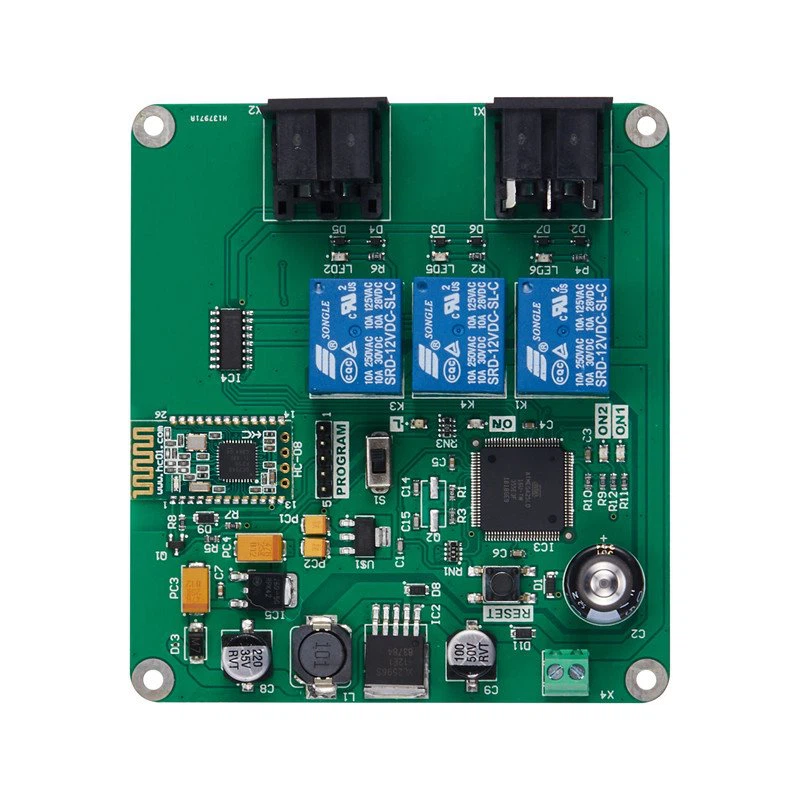
- Min. Order Quantity: 1 piece
- Board Type: Rigid PCB
- Assembly Types: SMD, BGA
- Board Size: 20 × 20 cm
- Min. Package: 01005 (0.4 mm × 0.2 mm)
Description
Product Parameters
| Parameter | Specification |
|---|---|
| Min. Order Quantity | 1 piece |
| Board Type | Rigid PCB |
| Assembly Types | SMD, BGA |
| Board Size | 20 × 20 cm |
| Min. Package | 01005 (0.4 mm × 0.2 mm) |
Product Display
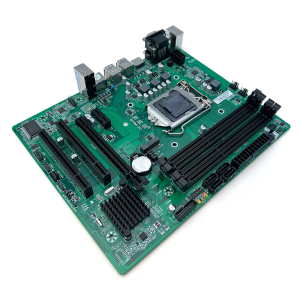
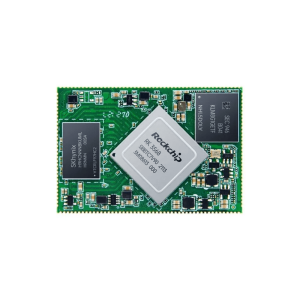
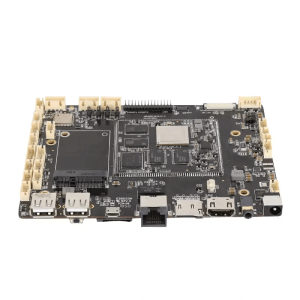
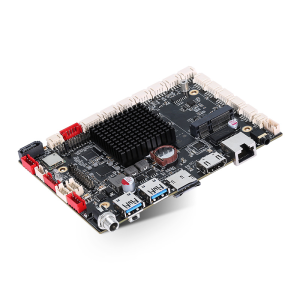
The IoT market is developing rapidly, increasing the demand for reliable and flexible IoT development boards. As an electronic manufacturing service provider, Deku supports OEM and customization services for IoT development PCBA boards, helping customers develop and manufacture boards for different IoT applications.
What Is an IoT Development Board?
An IoT development board is a printed circuit board that integrates essential electronic circuitry and hardware to facilitate the development, testing, and prototyping of microcontroller-based and connected devices. It provides developers with the basic hardware interfaces needed to program, control, communicate with, and expand IoT devices.
Typical Components of a Development Board
- Power Supply Circuitry: Provides the required operating voltage for the microcontroller and other onboard components. Depending on the design, the board may support a suitable external power supply or regulated power input.
- Programming Interface: Provides a connection between the development board and a computer, allowing developers to program, debug, and update the microcontroller or processor.
- Basic Inputs: Common input components such as push buttons allow developers to test user commands and basic control functions.
- Basic Outputs: LEDs and other simple output components provide visual feedback and help developers verify the operation of programmed functions.
- I/O Pins: Input and output pins provide connections for external components such as motors, temperature sensors, displays, and other peripheral devices.
Key Features of an IoT Development Board
Processing Power
- Processor Options: Processing capability can be provided by a CPU, microcontroller, FPGA, or other programmable logic device. Microcontrollers are commonly used because they provide accessible development environments and programming tools.
Wireless Capability
- Wireless Communication: Integrated wireless connectivity enables IoT devices to communicate without requiring a separate external transceiver module. Depending on the board design, supported wireless technologies may include Bluetooth, Zigbee, Wi-Fi, and other communication protocols.
Expandability
- Flexible Expansion: Expansion interfaces allow additional hardware and functionality to be connected to the development board. Common interfaces include GPIO, UART, SPI, and other communication protocols, enabling interaction with sensors, actuators, displays, and peripheral devices.
Memory
- Onboard Memory: Built-in memory is important for storing firmware, configuration data, and application information. Flash memory can provide storage for programs and data, while support for MiniSD or MicroSD cards can provide additional storage capacity for applications requiring larger amounts of data.